

In today’s evolving workplace, glass wall systems have become synonymous with modern office design. They offer natural light, flexibility, and openness. Yet as architects and designers continue to specify glass, a critical question remains: how can these visually open environments also support acoustic privacy needs? The answer lies not in one solution, but in a systems-based approach to acoustic design.
Glass wall systems play a pivotal role in shaping contemporary interiors, but acoustics cannot be solved by partitions alone. Acoustic performance is deeply tied to how a space is designed, detailed, and occupied, as well as material choices. Metrics like Sound Transmission Class (STC) and Noise Isolation Class (NIC) are often used to evaluate performance, yet they only tell part of the story. STC measures how well a partition blocks sound between spaces, while NIC reflects real-world acoustic behavior, including flanking paths. However, these numbers alone cannot account for how sound travels through ceilings, floors, mechanical systems, etc. In other words, acoustics is less about hitting a number and more about shaping an experience. Designers are increasingly recognizing that sound privacy depends on a constellation of elements working together.
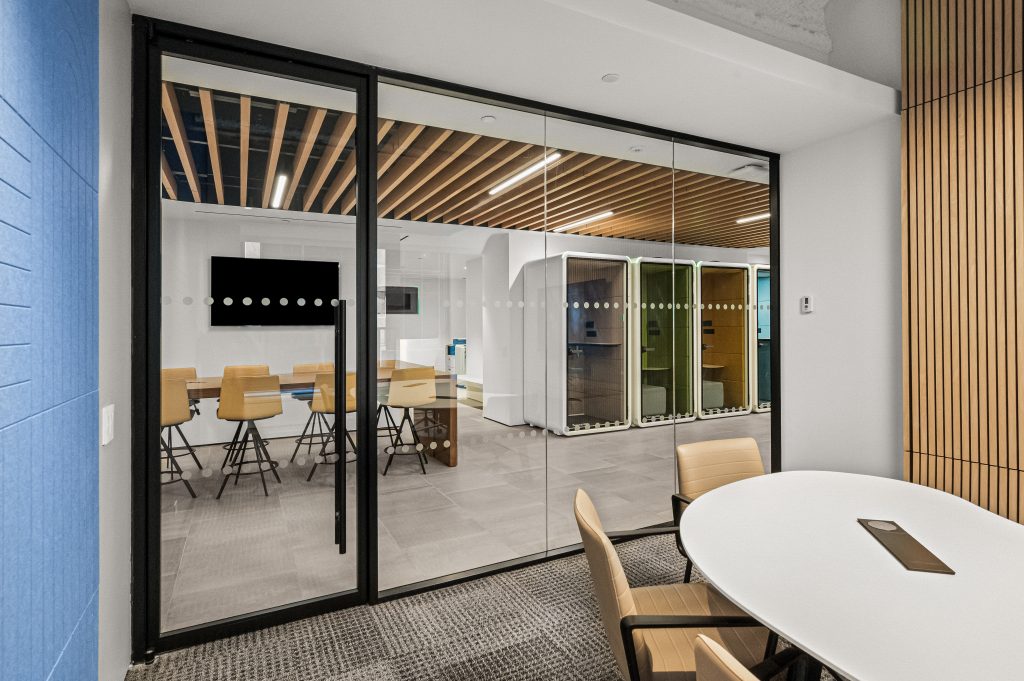
Consider the following to optimize sound privacy in your designs:
- Ceiling systems: Open plenum ceilings can allow sound to travel over partitions. Pair glass walls with acoustic ceiling treatments or full-height construction to improve performance.
- Flooring and finishes: Hard surfaces reflect sound, while soft materials like carpet, felt or wood panels, and upholstered furniture help absorb it.
- Mechanical systems: HVAC noise and duct pathways can contribute to sound transmission, so be sure to coordinate carefully.
- Door seals and perimeter detailing: With any glass wall project, skillful installation is a must, because even the smallest gaps can compromise acoustic integrity.
A great example of these practices can be seen in one of our recent New York-based projects.
For this project, the design team chose the HUSH Series but opted for a single-glazed system instead of a double-glazed one. While our single-glazed HUSH delivers a lower STC rating than our double-glazed version, the design team leveraged elements mentioned above to deliver the tenant’s sound privacy requirements. For example, throughout the space there are wooden ceiling systems that not only elevate the aesthetics of the space but also help dampen sounds. Furthermore, in each meeting room, the floors are carpeted, and there is wood paneling and felt on the walls to further absorb sound.
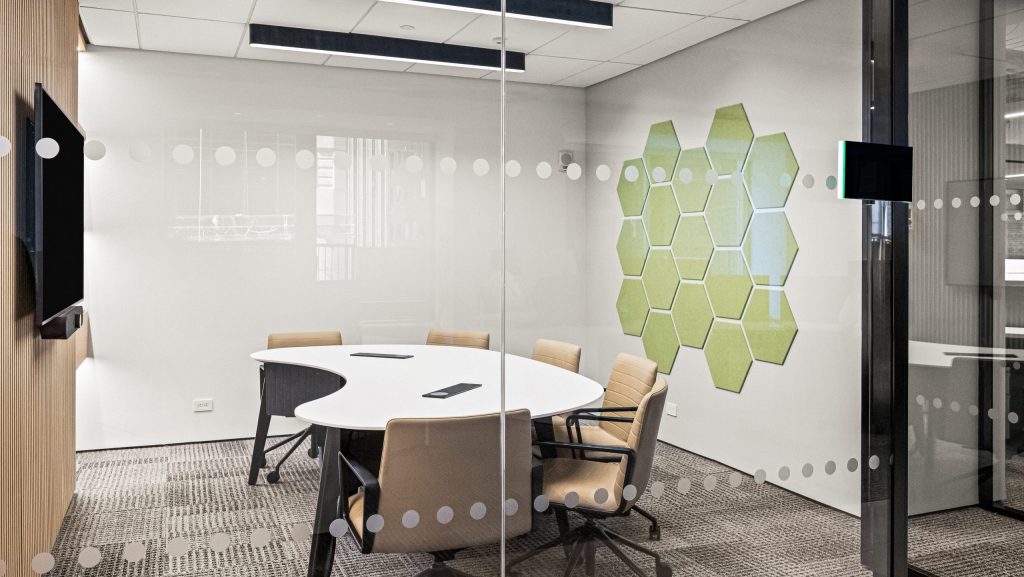
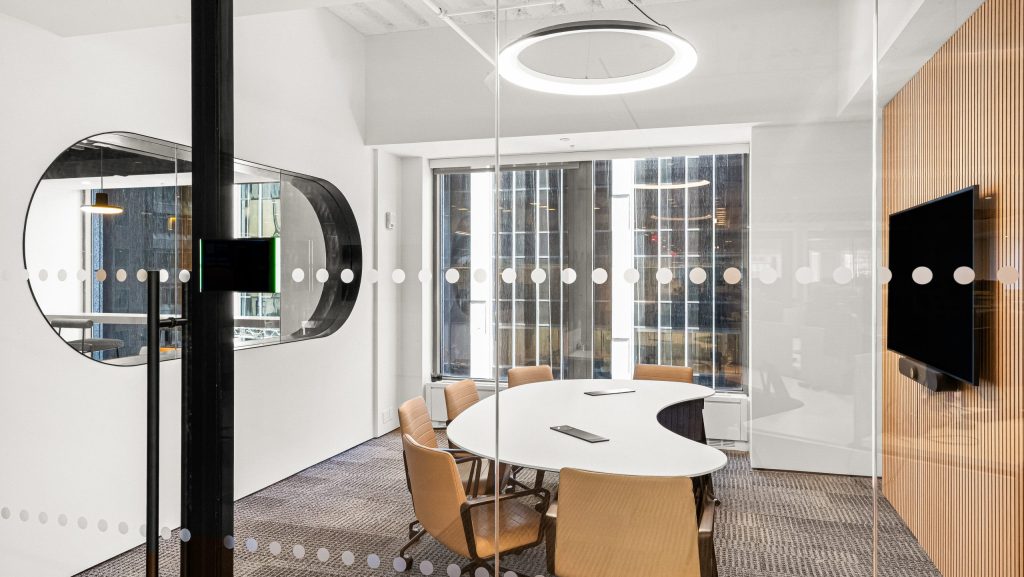
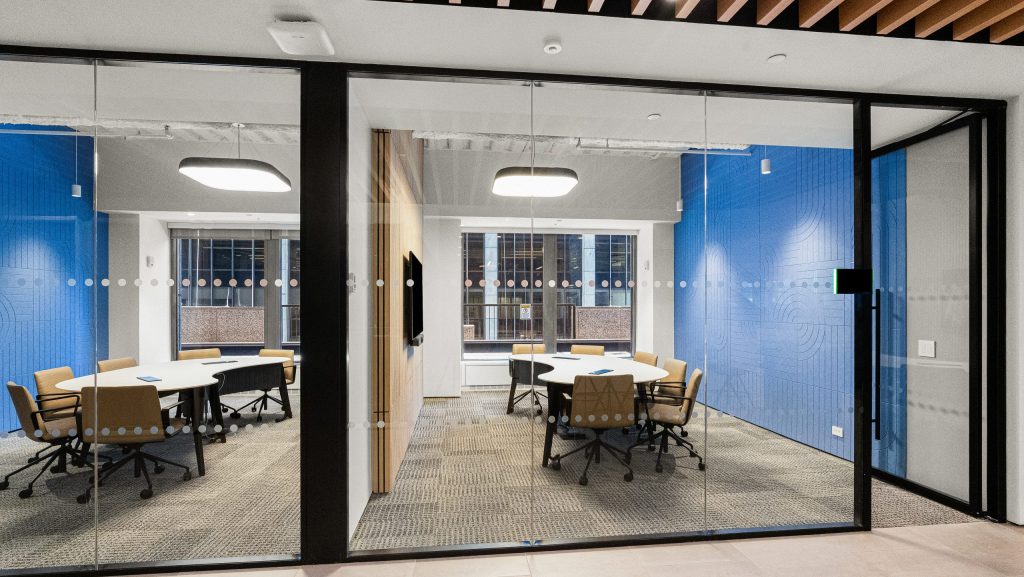
But let’s say down the road, more sound privacy is needed. Then what? One of the functional features of our HUSH Series is that it can easily be changed from single to double glazing due the snap trim we’ve engineered into its design. So if a tenant ever wanted to move from a single-glazed system to a double-glazed system (or vice versa), it’s a straightforward change.
To learn more about our HUSH Series, download our brochure. Or, if you wish to learn more about acoustics, download our Acoustic White Paper.